

Hi all,
Another blog on the subject of a healthy diet as I’ve had several emails about this. I have covered the need for a nutritious diet and the 6 steps to a healthy post-natal diet.
This time I’d like to cover something that really doesn’t get mentioned that much by personal trainers. When was the last time you looked at the labelling on your products? I mean looked at the back of the package rather than the slogans on the front.

“High in Protein”, “Source of protein”. “High in Fibre”, “Source of Fibre” etc. What does it actually mean and are those products really “high in X”?
A small disclaimer; I’m using the EU regulations on food labelling here. If you’re in the US you’re obviously governed by the FDA and might have some differences.
Let’s look at the “High in” and “Source of” claims first.
“High in protein” means 20% of all calories come from protein.
“High in fibre” means the product contains at least 6g of fibre per 100grams or 3 grams per 100Kcal.
“Source of protein” means 12% of all calories come from protein.
“Source of fibre” means the product contains at least 3g of fibre per 100grams or 1.5 grams per 100Kcal.
So the “source of” statement doesn’t really mean all that much.
Let me illustrate this with two of everybody’s favourite products.
Icecream and protein balls!
In the “not healthy but not terrible corner’ we have
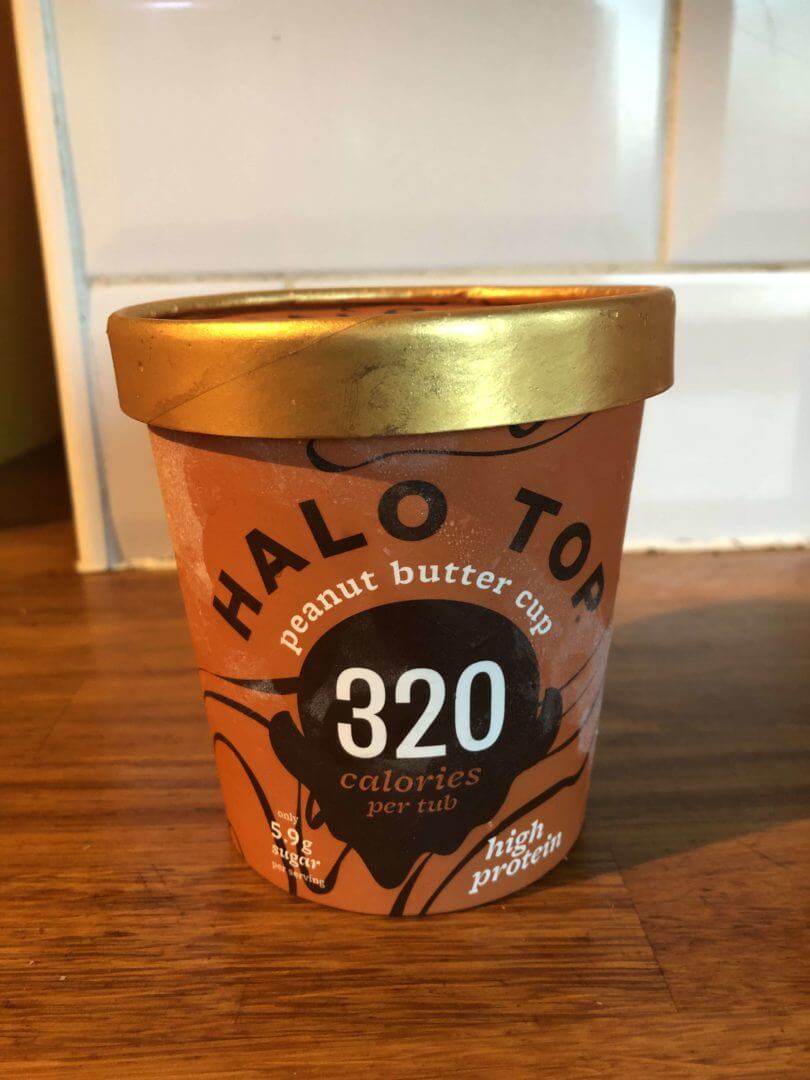
My wife went to the supermarket the other day and came back with this.
A low calorie, high protein and low sugar icecream. How amazing is that? Well, OK, they don’t claim to be low-sugar, but they imply it with the 5.9s sugar in nice decent sized letters.
Let’s look at the claims by looking at the back;
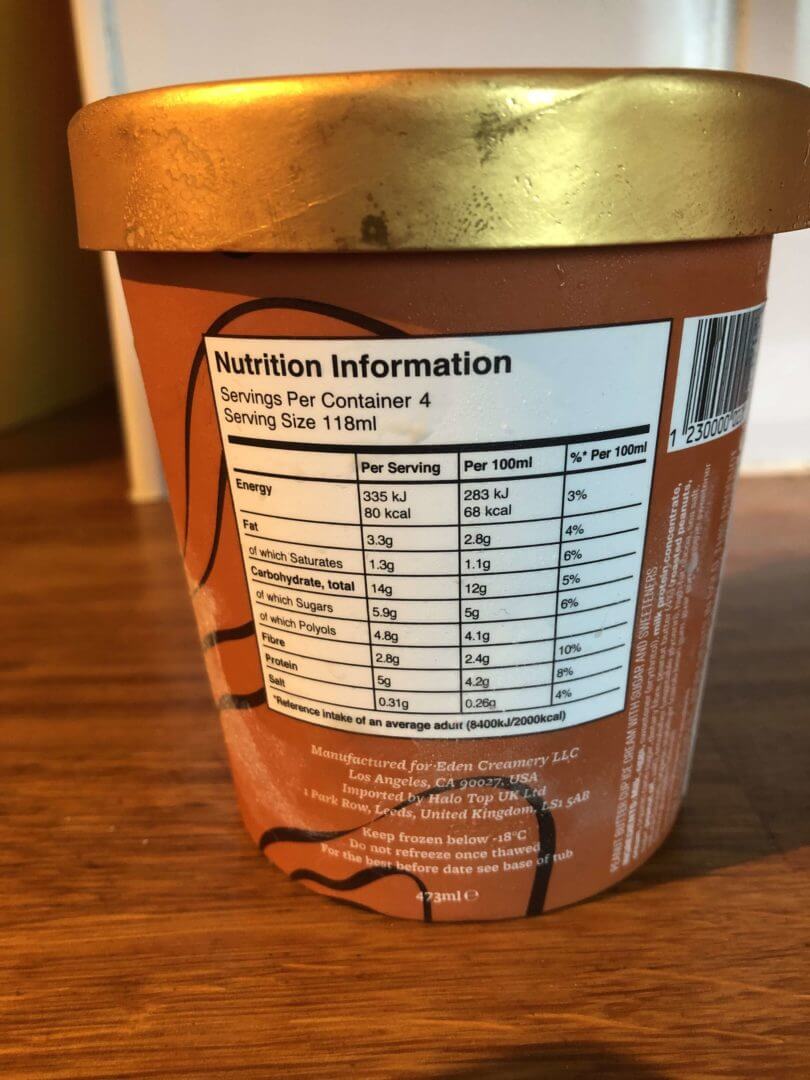
So it’s 320Kcal per tub which is about 1/3rd of standard icecream. To be honest, that’s pretty amazing.
The 5.9g of sugar is per serving. So it’s actually 24g of sugar per tub. I personally hate it when they have a “full tub” claim right next to a “per serving” claim as it reeks of trickery.
The High protein claim is more interesting. 4.2Grams of protein per serving so definitely over the 20%. I do think that if you’re counting on getting your protein from icecream you have bigger problems with your diet than protein deficiency.
Just in case you’re wondering; Yes I bought and tried it and it tastes as horrible as I expected.
As an aside; Low calorie icecream, what’s the feckin’ point? If you’re going to enjoy something actually enjoy it, just don’t have an entire tub full.
And in the “healthy options corner”;
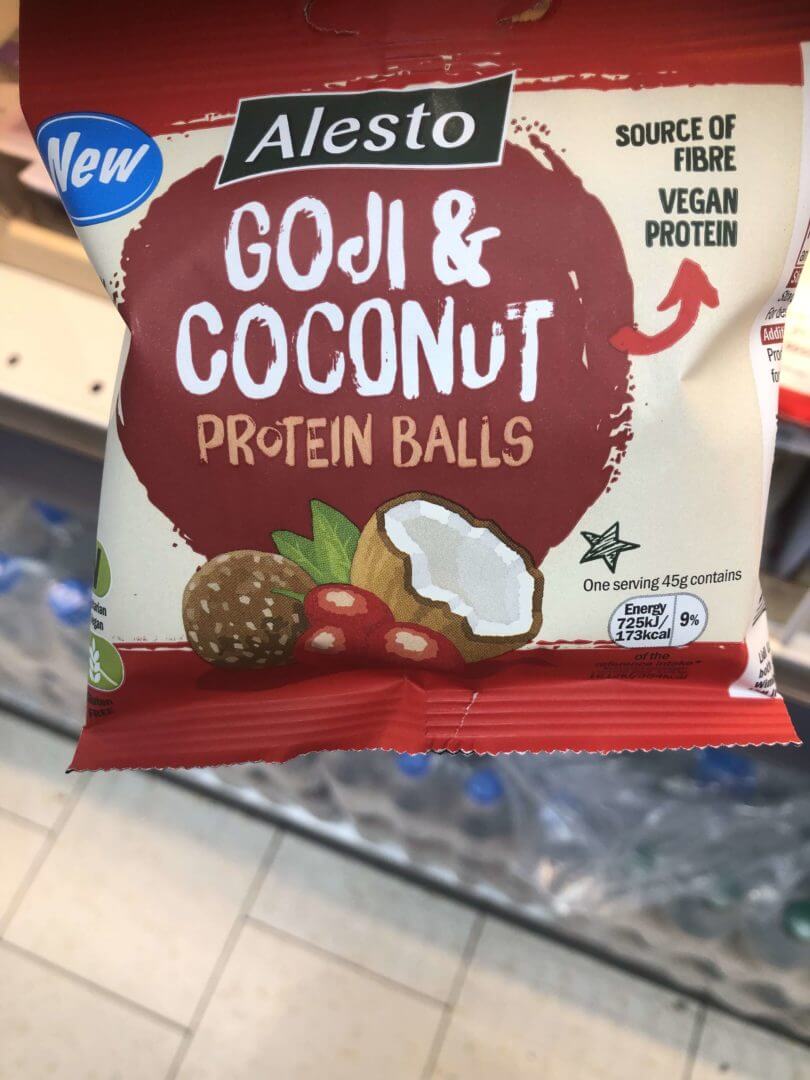 Protein balls, vegan protein and a source of fibre?
I found these next to the till at the supermarket. They look great, right? The supermarket in question also claims they don’t have unhealthy snacks at the tills anymore so that helps imply that it’s healthy.
But look at the back;
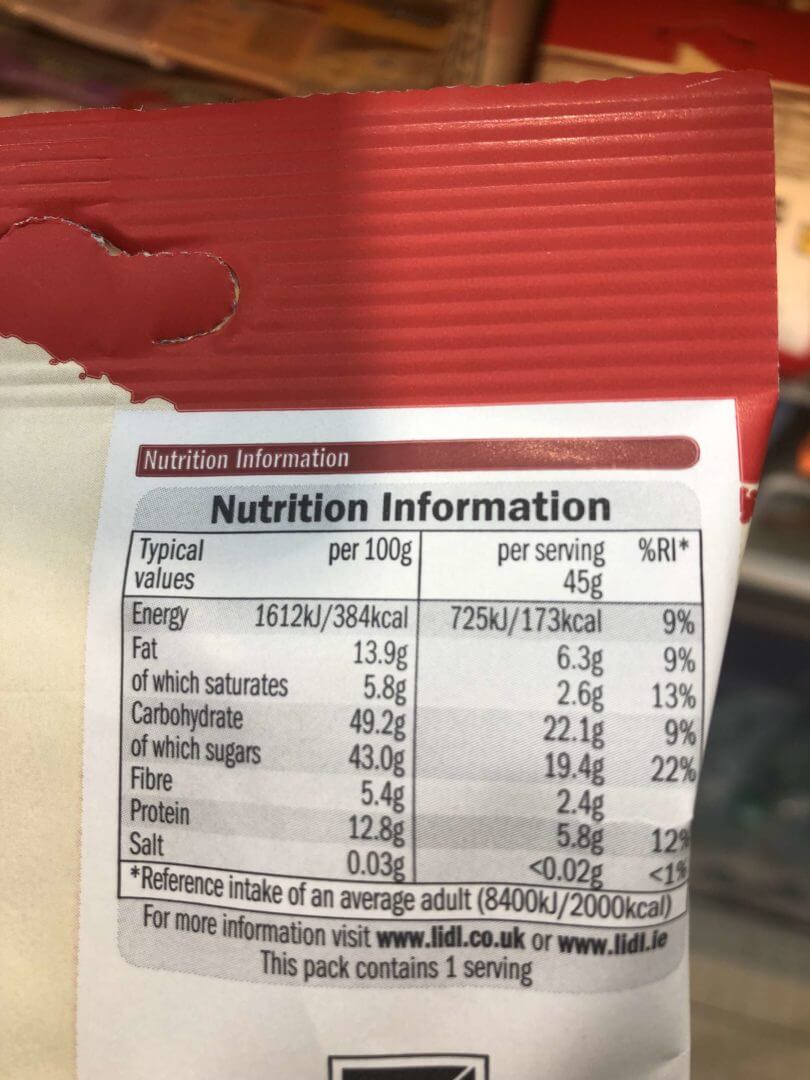 Oh dear.
So we have 2.4grams of fibre. Yeah, OK. We also have 19.4 grams of sugar per pack.
Remember that the ice-cream above only had 24 grams PER TUB!
And also note that these “protein balls” contain no more than 5.8grams of protein per pack.
So, you’re actually better eating half a tub of the icecream than the protein balls.
Half a tub of the icecream has fewer calories, less than half the sugar and more protein than the “healthy” protein balls.
This just shows you that the claims, packaging and placing of products really doesn’t mean anything.
So please have a quick look at the back of the pack when deciding on which snack you should buy.
Take care,
Peter


